
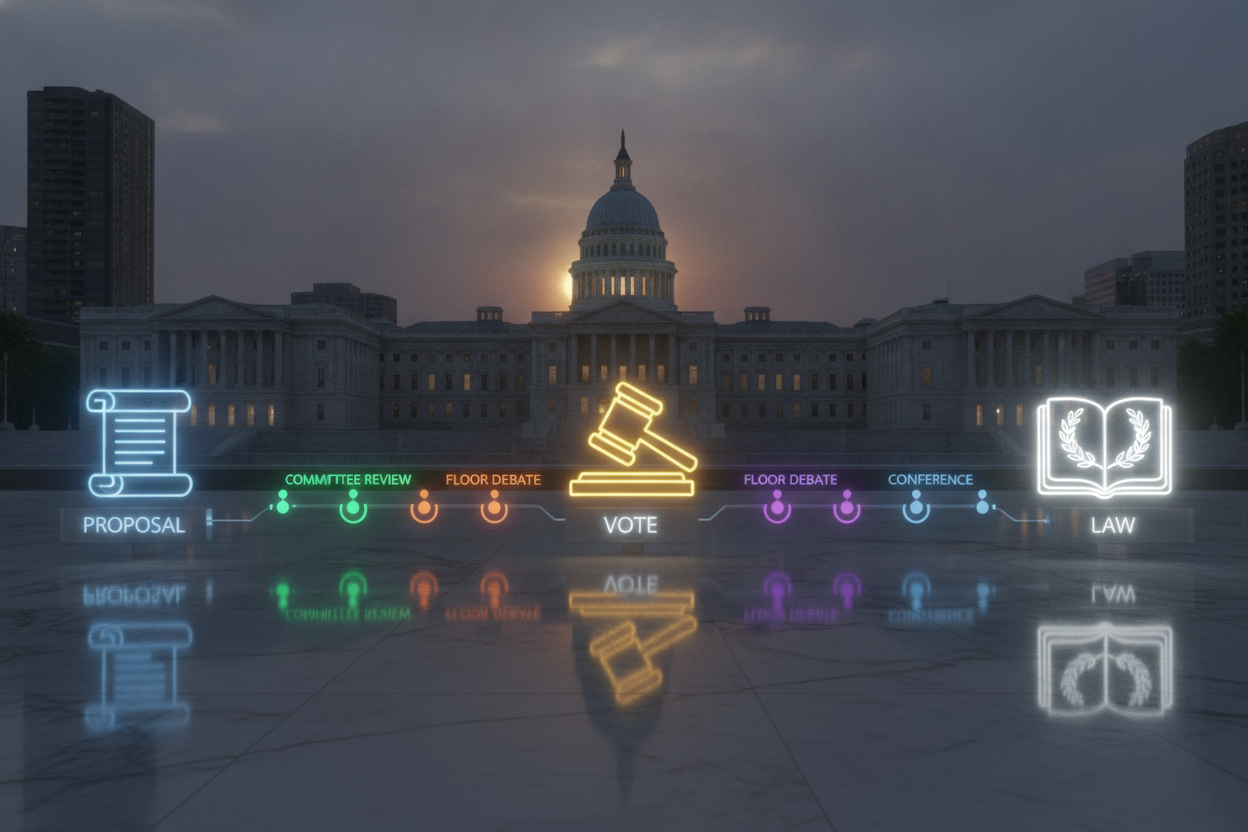
Following legislation is a great way for students to understand how government works in practice. A bill does not become law instantly. It usually moves through drafting, committee review, debate, amendments, and votes before reaching final approval. Learning that process helps students see why policy change can take time and why compromises often shape the final outcome.
The best place to begin is with official legislative websites. These pages often include bill text, sponsors, committee assignments, and updates on each stage of the process. Reading those materials can feel technical at first, but they provide a reliable picture of what is happening. Students can also use news coverage to understand the broader context, as long as they check whether the article is reporting facts or offering analysis.
Tracking legislation is especially useful for students interested in public policy or political research. It shows how issues move from ideas into action and how different representatives influence the final result. A bill on tuition support, housing, or voting access may change several times before it is signed, and those changes can reveal a lot about priorities and tradeoffs.
When students learn to follow legislation, they gain a clearer view of democracy as an ongoing process rather than a single event. That perspective makes elections, candidate research, and civic engagement more connected and more meaningful.
Leave a Reply