
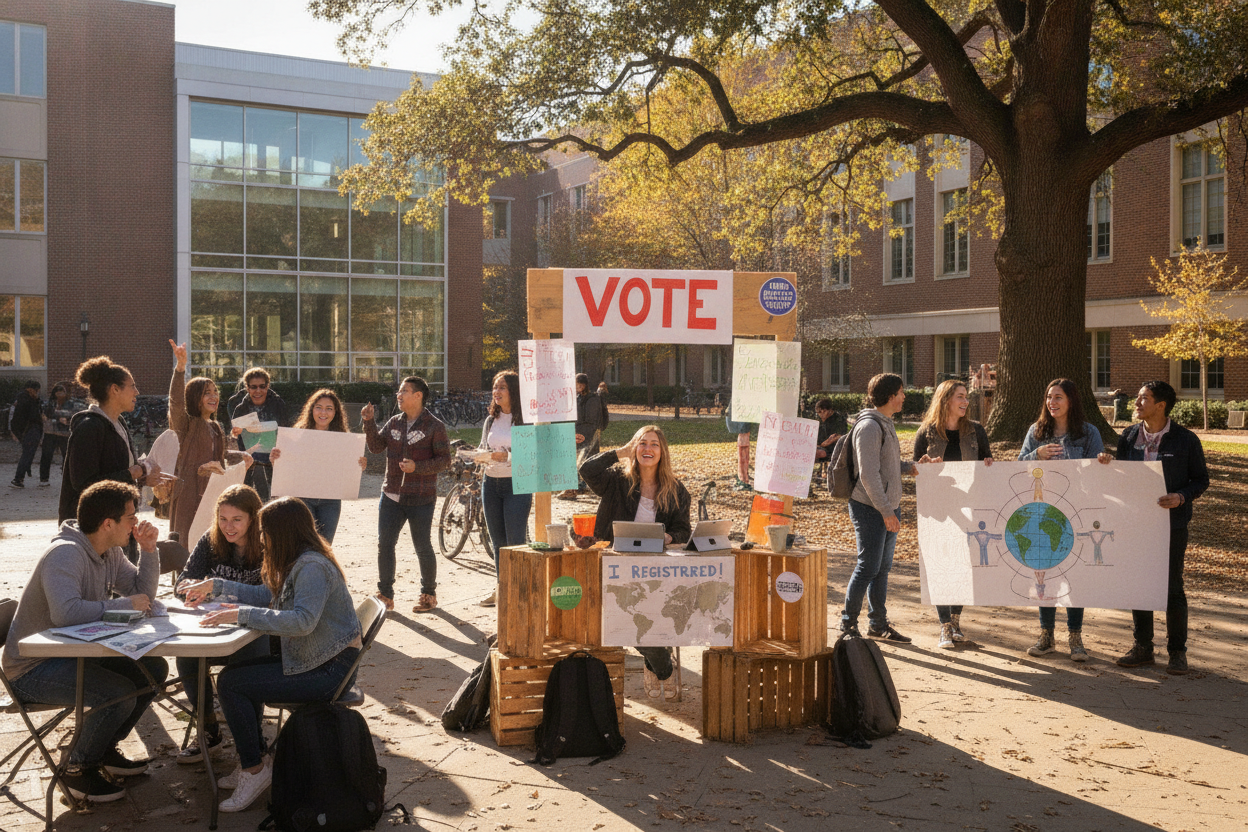
Campus civic engagement creates opportunities for students to move from awareness to action. On many campuses, student organizations, residence halls, libraries, and academic departments all play a role in helping peers learn about elections and public issues. These spaces can make voting feel less isolated and more connected to daily student life.
Successful civic engagement starts with clear information. Students need easy access to registration details, election deadlines, and candidate resources. When that information is available in familiar places, participation tends to rise. Peer-to-peer outreach also matters because students often trust classmates who can explain the process in simple terms and answer basic questions without jargon.
Events can deepen that engagement. Nonpartisan panels, issue forums, and voter information tables give students a chance to ask questions and compare viewpoints in a structured setting. These programs work best when they focus on education rather than persuasion, allowing students to think critically and decide for themselves what matters most.
Campus civic engagement also supports leadership development. Students who help organize voting drives or produce informational content gain experience in communication, teamwork, and public service. Those skills are useful well beyond election season. When campuses treat civic participation as part of student learning, they help build habits that last long after graduation.
Leave a Reply